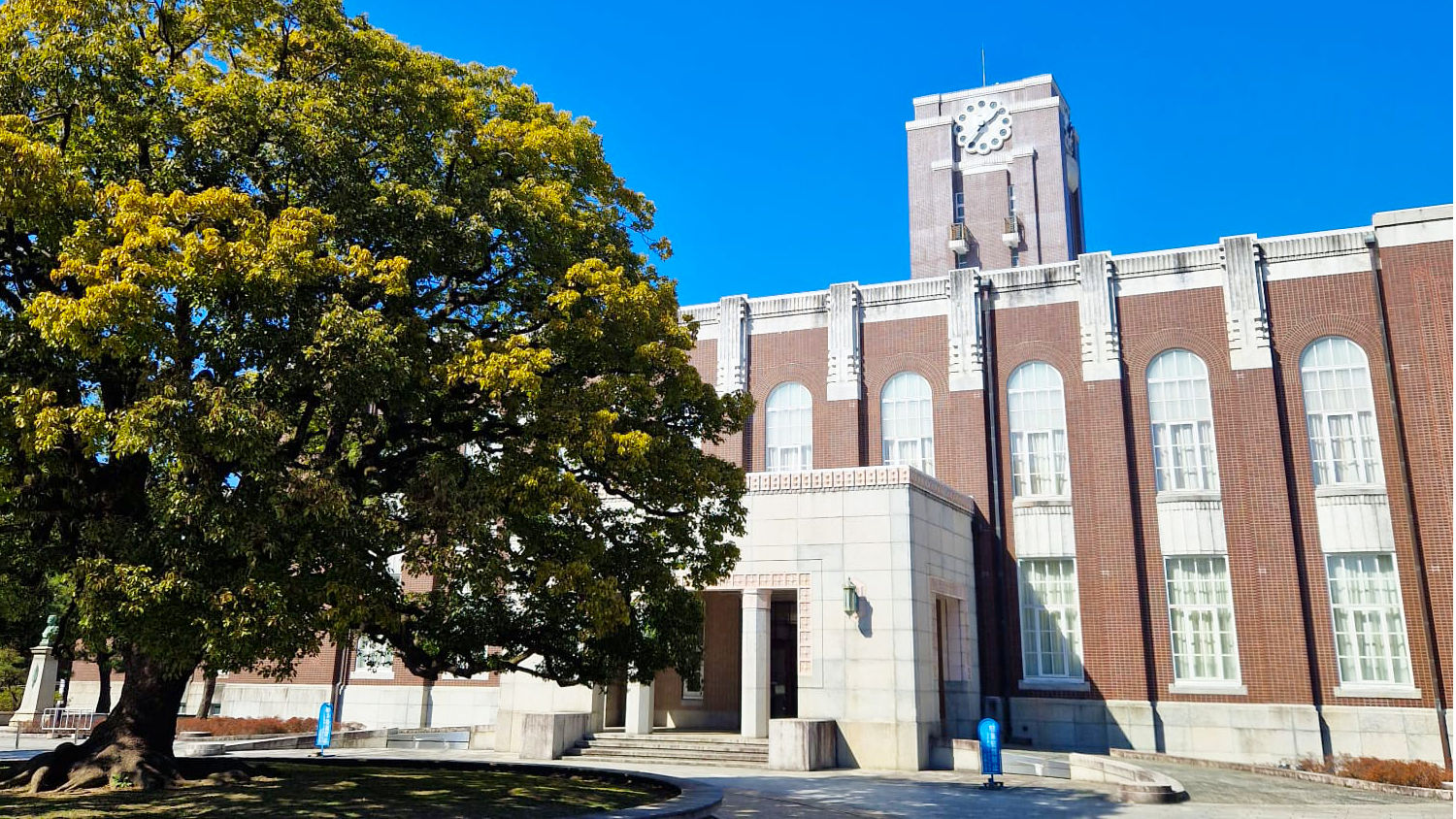
Exchanging Ideas and Strengthening Connections in Japan

From 4 to 6 October, University of Zurich (UZH) President Prof. Michael Schaepman and Prof. Christian Schwarzenegger, Provost of Universitas 21 and UZH Professor, visited Japan to participate in the 2026 Science and Technology in Society (STS) Forum and strengthen ties with Kyoto University (KU).
How can science and technology contribute to addressing the challenges ahead, and what role can universities play? At the STS Forum in Kyoto, leaders from academia, policymaking, and industry gathered to exchange perspectives on major developments in science and technology and their implications for society. This year’s discussions took place against a backdrop of rapid technological change and a shifting international environment, underscoring the value of dialogue across countries, disciplines, and sectors.
A strong international partnership
Alongside the STS Forum, the visit provided an opportunity to strengthen UZH’s close and longstanding relationship with its strategic partner, KU. The visit coincided with an important moment of transition at KU, with Prof. Yasuto Tachikawa taking office as KU President on 1 October, succeeding Prof. Nagahiro Minato.
Prof. Schaepman and Prof. Schwarzenegger met Prof. Tachikawa and members of the new university leadership, reaffirming the mutual commitment to the UZH-KU strategic partnership. They also met outgoing President Prof. Minato, thanking him for his longstanding engagement and the pivotal role he has played in strengthening relations between the two institutions.
Established at university level in 2020, the strategic partnership has grown considerably, driven by strong engagement across both universities. What began with particularly close links in regenerative medicine has developed into a broad, multidisciplinary collaboration spanning fields including life sciences, artificial intelligence, law, environmental and plant sciences, and healthy longevity. Today, researchers across UZH and KU are involved in dozens of active collaborations, reflecting both the breadth of the relationship and the strong interest among academics in working together.
Recent cooperation has also expanded in areas such as artificial intelligence and biomedical data science, reflecting how an established academic relationship can evolve as new scientific questions and opportunities emerge.
Connecting research and entrepreneurship
One such opportunity was at the center of an event hosted by the Swiss Ambassador to Japan, H.E. Roger Dubach, at the Swiss Embassy in Tokyo on 6 October.
At the event, Prof. Schaepman delivered a speech on the importance of the UZH-KU strategic partnership and announced the new Global Entrepreneurship Development Joint Program. Prof. Schwarzenegger then joined researchers from KU for a panel discussion exploring this new initiative in greater detail. Focusing on translational life sciences, the program will provide applied entrepreneurial training for PhD students and postdoctoral researchers, while exposing participants to the markets, industry ecosystems and cultures of Switzerland and Japan. The aim is to create an international environment in which researchers from both universities can develop ideas and pursue cross-border entrepreneurial collaboration.
The program is designed around sustained exchange between Zurich and Kyoto, giving early-career researchers the opportunity to engage with the research and innovation environments of both institutions. Combining entrepreneurial training with international and interdisciplinary exchange, the initiative aims to support researchers in developing ideas beyond the academic setting, exploring their potential for innovation and building new connections between Switzerland and Japan.
-
 Prof. Michael Schaepman, President of the University of Zurich (UZH), delivering remarks on the UZH-KU strategic partnership, including an announcement of the new Global Entrepreneurship Development Joint Program.
 -
 Prof. Nagahiro Minato, Immediate Past President of Kyoto University (KU), delivering remarks on the UZH–KU Strategic Partnership.
 -
 H.E. Roger Dubach, Ambassador of Switzerland to Japan, delivering welcome remarks.
 -
 From left to right: Prof. Michael Schaepman (President of UZH), Prof. Nagahiro Minato (Immediate Past President of KU), H.E. Roger Dubach (Ambassador of Switzerland to Japan), Prof. Christian Schwarzenegger (Provost of U21; UZH Professor).
 -
 Left to right: Ms. Kyoko Marumo Suzuki (Head of Science and Technology Office, Swiss Embassy), Prof. Terumasa Matsuyuki (KU Professor), Prof. Michael Hengartner (President of ETH), Prof. Michael Schaepman (President of UZH), Prof. Nagahiro Minato (Immediate Past President of KU), H.E. Roger Dubach (Ambassador of Switzerland), Prof. Koji Murota (KU Professor), Mr. Markus Reubi (Special Envoy and Project Lead for Geneva AI Summit 2027), Prof. Christian Schwarzenegger (Provost of U21; UZH Professor).
From dialogue to collaboration
The visit highlighted the different ways international academic cooperation takes shape, from dialogue on shared challenges among leaders in academia, policymaking, and industry to long-term strategic partnerships and new opportunities for the next generation of researchers. While the STS Forum addressed broader questions surrounding science, technology and society, the meetings with Kyoto University and the event at the Swiss Embassy showed how sustained partnerships can turn dialogue into concrete collaboration. The new entrepreneurship program builds on this foundation, creating opportunities for researchers in Zurich and Kyoto to exchange knowledge, develop ideas and forge connections across academic, cultural and innovation environments.