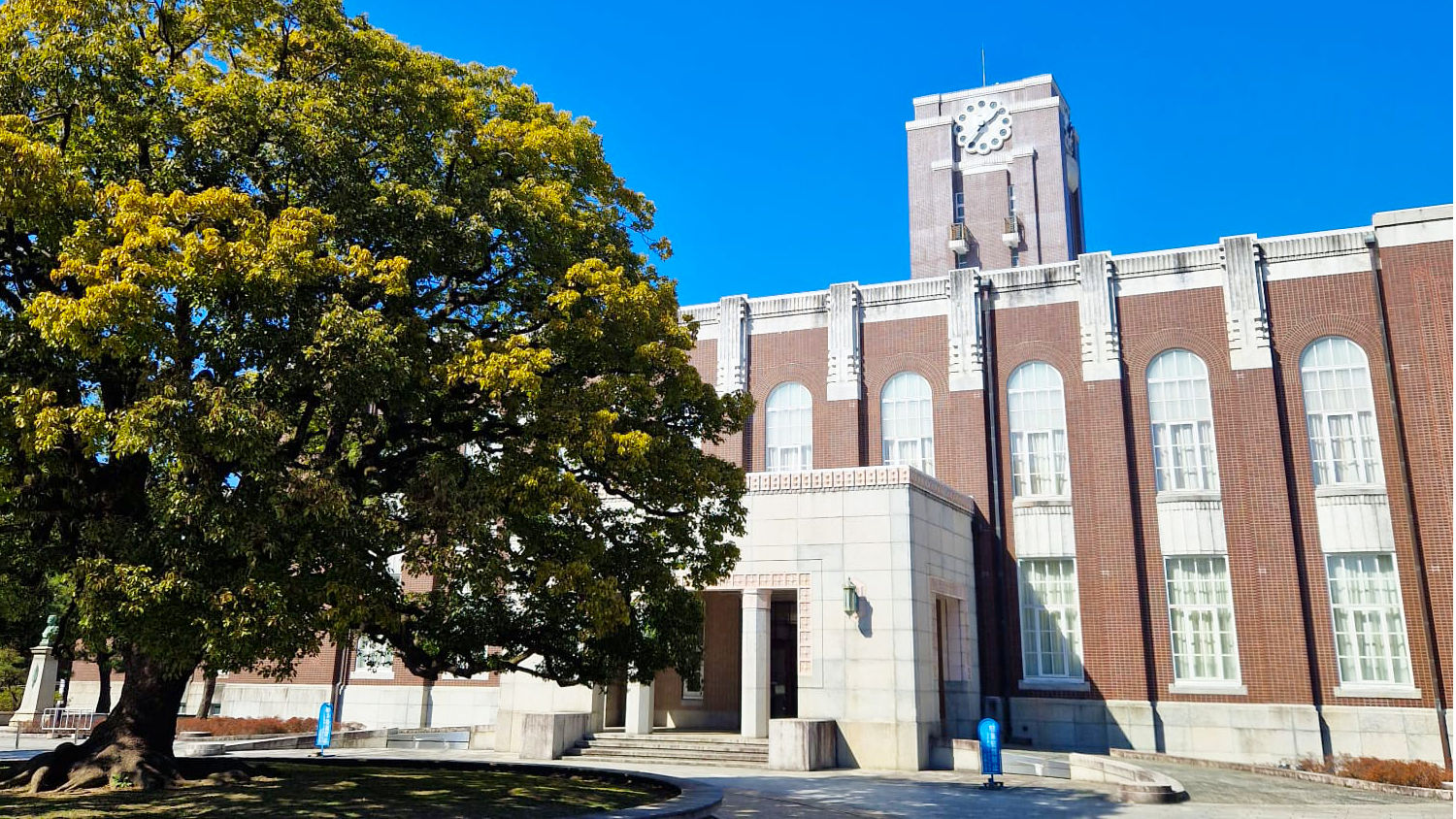
Improving Quality of Life: The University of Zurich and Kyoto University Deepen Their Strategic Partnership at the 2026 Joint Symposium
From 4 to 6 February, the University of Zurich (UZH) hosted a visiting delegation from Kyoto University (KU) for another joint UZH–KU Symposium. Held under the theme “Improving Quality of Life – What We Can Learn From Each Other,” the three-day event brought together researchers and university leaders to explore how interdisciplinary collaboration can advance wellbeing in a rapidly changing world.
.png)
UZH President Michael Schaepman opened the symposium by emphasizing the importance of international cooperation in addressing global challenges. He highlighted the long‑standing ties between the two universities and their shared commitment to excellence, innovation and societal impact. “Multinational and interdisciplinary collaboration has become more crucial than ever,” he noted. “Therefore, we are very proud to have Kyoto University among our most valued relevant collaboration partners.”
Connecting people, ideas and perspectives
The symposium brought together researchers from a wide range of disciplines; from regenerative medicine and environmental biology to AI ethics, law, and cultural studies. What united these conversations was a shared conviction: improving quality of life requires not only scientific excellence, but also the willingness to learn from each other across fields, cultures and continents.
The welcome reception at the UniTurm a warm and collegial tone to kick off the symposium. The reception, attended by the Japanese Ambassador to Switzerland as well as UZH and KU leadership and researchers, was a reminder that global collaboration is built not only on shared research interests, but also on trust, hospitality and human connection.
.png)
Interdisciplinary dialogue for global challenges
Throughout the symposium, researchers from Kyoto and Zurich explored how their work contributes to improving quality of life, often finding points of connection across disciplines. Conversations that began in one field frequently resonated in another, revealing how closely biomedical innovation, environmental systems and technological change are intertwined.
In regenerative medicine, participants reflected on nearly a decade of collaboration between UZH’s Institute for Regenerative Medicine (IREM) and Kyoto University’s Center for iPS Cell Research and Application (CiRA). Their long‑standing partnership, spanning joint research, researcher exchange and advances in iPSC technologies, illustrated how sustained international cooperation can accelerate progress toward clinical applications.
Environmental quality offered another lens through which researchers examined wellbeing. Plant scientists, systems biologists, and network researchers discussed how organisms respond to changing environments, how crop evolution can be guided through genomics, and how biological and socio‑economic networks can be analysed using new computational tools.
Artificial intelligence brought together yet another set of complementary approaches. Discussions ranged from trust, privacy and data governance — including the implications of voice data, health data regulation, and copyright — to the cultural and ethical dimensions of AI explored in the AI & Religion session. Researchers also exchanged insights on human–AI collaboration, drawing on work from both universities on collective intelligence, personalized AI assistants, and hybrid human–machine systems.
A Leadership meeting in Medicine as well as a visit to the University Hospital inspired knowledge exchange and opportunities for collaboration.
Across these conversations and to the day two years after Switzerland and Japan celebrated their 160th anniversary of diplomatic relations, researchers and leadership from UZH and Kyoto University emphasized the importance of responsible innovation and the benefits of combining Swiss and Japanese perspectives. The thematic overlaps that emerged throughout the symposium underscored the need to connect ideas across fields, cultures and research traditions to address global challenges.
.png)
Empowering the next generation of researchers
A highlight of the symposium was a pitch session for early-career researchers, where young scholars from both universities presented their work in fields ranging from neuroscience and genetics to AI, blockchain, and sustainable agriculture. Their contributions reflected the diversity and creativity of the UZH–KU research community and underscored the importance of mobility, mentorship, and international exposure; key pillars of UZH’s Global Strategy 2030.
Early‑career researchers were also deeply involved in the thematic discussions throughout the breakout sessions, demonstrating how the next generation is shaping the future of the partnership. Their engagement highlighted the importance of supportive structures: in a dedicated session on funding opportunities, participants received an overview of mechanisms that facilitate Swiss–Japanese collaboration, including the Leading House Asia Pacific and the UZH Global Funding Scheme.
.png)
Looking ahead: A partnership with global impact
As the symposium drew to a close, participants reflected on the synergies that emerged across the discussions and identified areas where UZH and Kyoto University can deepen their collaboration in the coming years. The conversations underscored a shared commitment to addressing global challenges through interdisciplinary research, innovative teaching and meaningful societal engagement.
The UZH–KU Symposium 2026 demonstrated that improving quality of life is not a task for any single discipline or institution. It requires the collective expertise of researchers across fields, the curiosity of early‑career scholars, and the strength of partnerships built on shared values. As UZH and Kyoto University look ahead, their collaboration continues to grow in depth, breadth and global relevance – a testament to what can be achieved when institutions learn from each other.
-
 UZH hosts welcomed KU delegates and guests at the university main building in Zurich, combining Swiss handshakes and Japanese bows in a moment of cross-cultural exchange. (Credits for all photos: André Hengst & Aline Gerber)
 -
 Around 35 representatives from Kyoto University attended the UZH-KU joint symposium, joining UZH faculty, researchers, and students.
 -
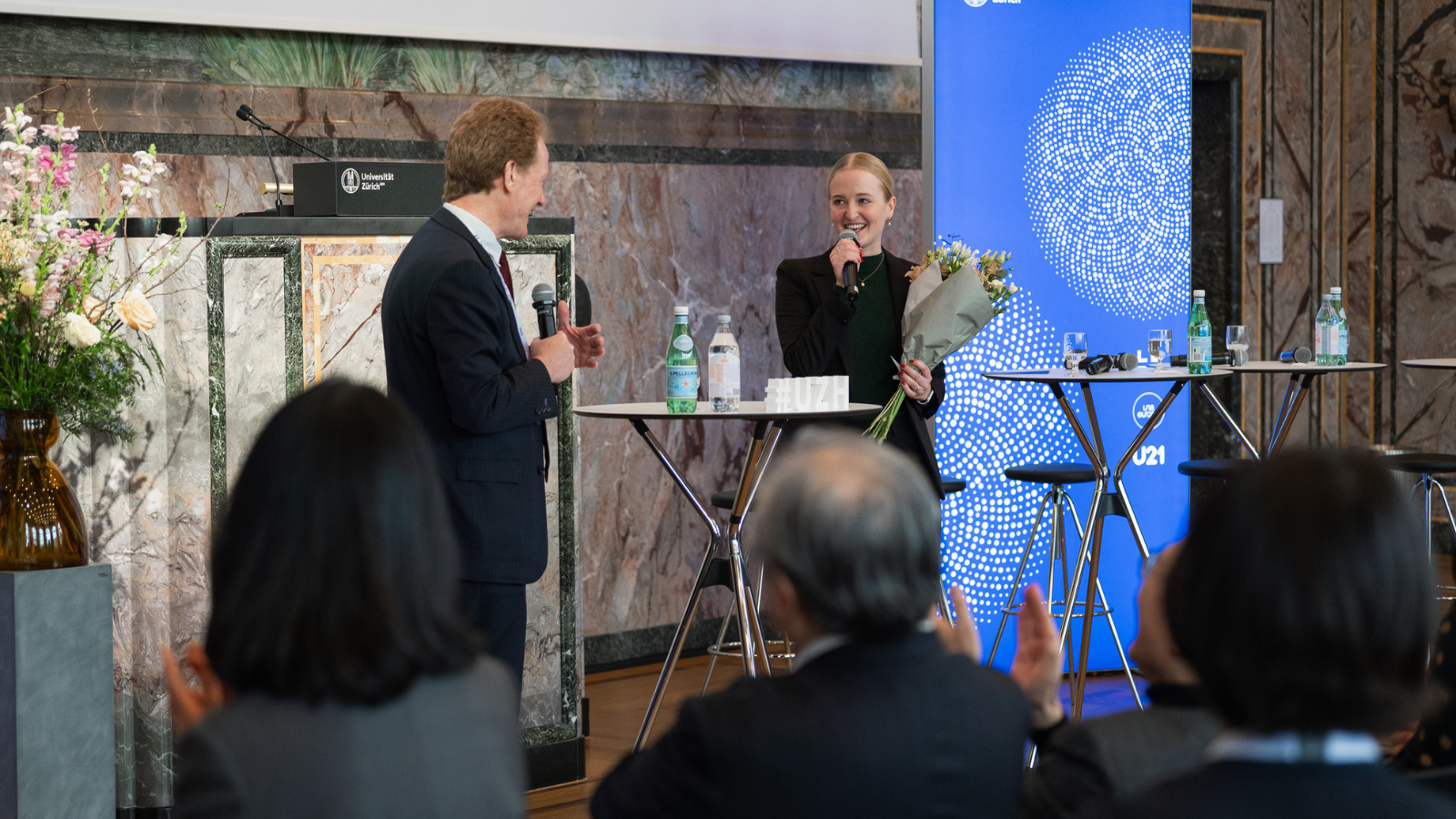 The three-day symposium was moderated by Prof. Christian Schwarzenegger, Vice President for Faculty Affairs and Scientific Information, and Leslie Reinhard, UZH Global Networks Partnership Manager.
 -
 Four sessions of the symposium were open to the public, fostering wider engagement and visibility for the research and collaborations between UZH and KU.
 -
 H.E. Toshiro Iijima, Ambassador of Japan to Switzerland, delivered one of three welcome addresses during the welcome reception on 4 February 2026, emphasizing the importance of diplomatic support for international academic collaboration.
 -
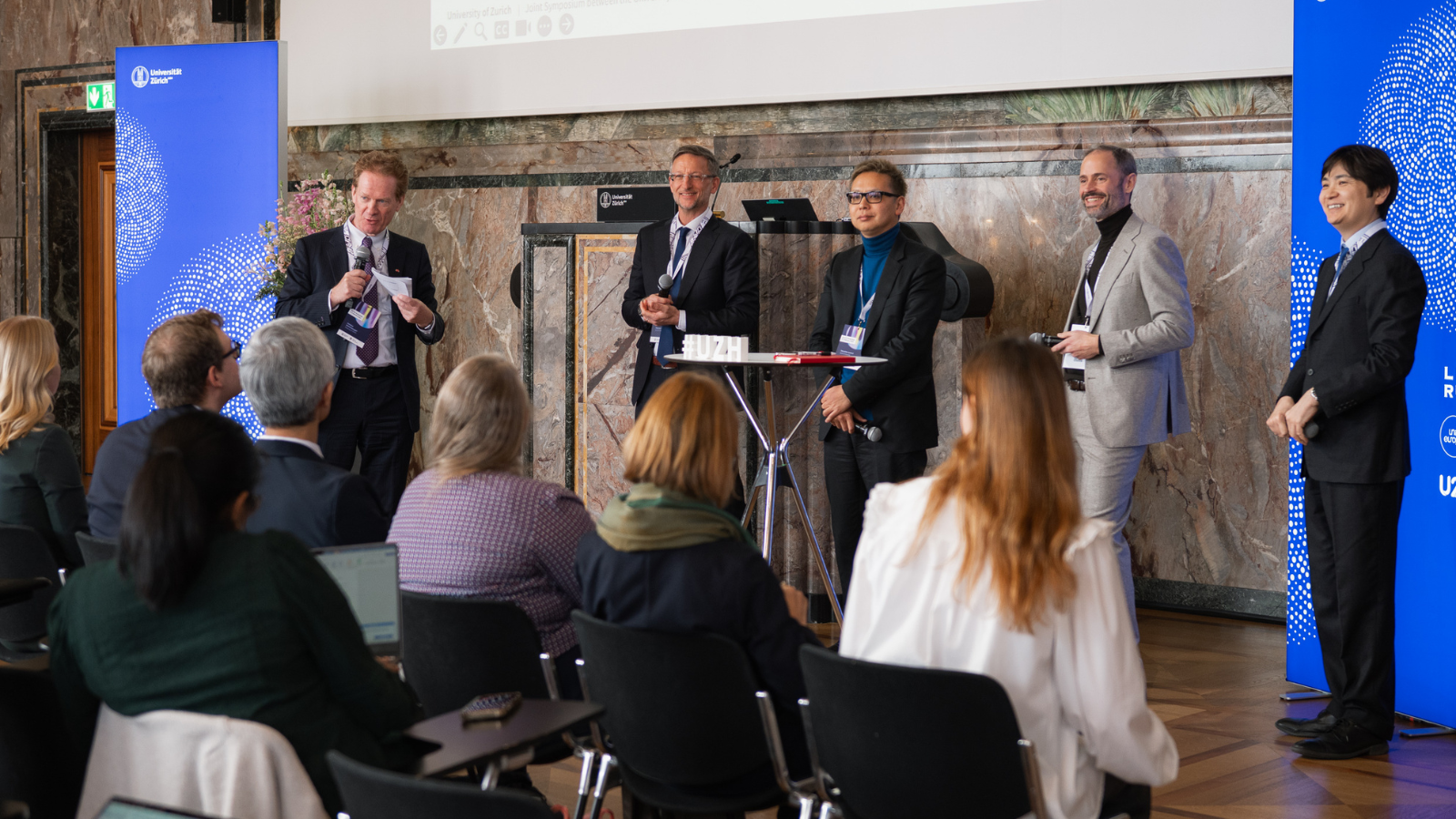 During the opening plenary on the following day, researchers presented the collaborations they have been involved in and highlighted the value of the UZH-KU partnership for their work. Pictured (from left to right): Prof. Christian Schwarzenegger, Prof. Florent Thouvenin, Prof. Tatsuhiko Inatani, Prof. Peter Picht, and Prof. Hiroki Habuka.
 -
 Gifts were exchanged between KU President Minato and UZH President Schaepman, marking the friendship and collaborative spirit between the two universities.”
 -
 The symposium offered a platform for interaction among diverse stakeholders, including university leaders, professors, professional staff, early-career researchers, and graduate students.
 -
 For the first time in a UZH-KU joint symposium, breakout sessions were introduced to facilitate interdisciplinary discussions on specific topics among participants.
 -
 Eleven early-career researchers (ECRs) from UZH and KU got the chance to showcase their latest research, spanning fields from neuroscience and AI to genetics and sustainable agriculture and more. Pictured (front row, left to right; back row, left to right): Christian Schwarzenegger, Kana Eguchi, Misako Yamazaki, Kristina Eiviler, Louisa Dury, Momo Kisuna, Suji Lee, Victor Meng, Lea Bogensperger, Shiyao Ding, Krongtum Sankaewtong, Arian Ehterami, Shunsuke Yoshioka.
 -
 In a dedicated pitch session, these ECRs presented their work to a live audience, gaining a valuable platform for visibility, feedback, and engagement with peers and senior academics. Pictured: Suji Lee.
 -
 Kana Eguchi, a former ECR in a previous UZH-KU joint symposium, shared her experiences today as an active researcher, illustrating the long-term impact of these collaborative opportunities.
 -
 The closing plenary featured a panel discussion exploring existing synergies and future opportunities for collaboration between UZH and KU. Pictured (from left to right): Prof. Christian Schwarzenegger, Prof. Mike Martin, Prof. Seiji Kumagai, Prof. Ikeda Yuichi, Prof. Woltjen Knut, Prof. Abraham Bernstein, Prof. Takayuki Ito.
 -
 Group photo of KU delegates and UZH participants, capturing the positive spirit of the UZH-KU Joint Symposium 2026.